
Title: Foundations of Mathematics 12 Textbook PDF Overview
Foundations of Mathematics 12 offers a concise, 594‑page guide covering trigonometry, geometry, data analysis, and statistical literacy. Pearson’s edition features interactive examples, real‑world applications, and a robust index for quick reference.Ideal for exam prep.Worksheets included now.!< /p>

Publication Details and Edition History

Published by Pearson Education Canada, Foundations of Mathematics 12 first appeared in 2010 as part of the Ontario curriculum alignment series. The initial release was a hardcover with 594 pages, featuring a comprehensive index and a set of interactive online resources. In 2013, Pearson issued a revised second edition to incorporate updated standards and expanded problem sets, adding a new chapter on statistical literacy and graphical models. The 2018 third edition introduced digital integration, offering students access to an e‑book platform with embedded quizzes and adaptive learning tools. The most recent 2024 fourth edition reflects the latest Ontario Math Curriculum, incorporating a redesigned layout, enhanced visual aids, and a focus on real‑world applications such as finance and data science. Each edition is identified by a unique ISBN and OCLC number, ensuring accurate cataloging across libraries. The textbook is available in both print and e‑book formats, with the e‑book version supporting cross‑platform compatibility, including iOS, Android, and web browsers. Pearson’s licensing agreements allow schools to purchase perpetual licenses for classroom use, while individual copies can be bought through authorized retailers. The publisher also provides supplementary materials, including teacher guides, answer keys, and downloadable worksheets, which are updated alongside each edition to maintain consistency with the core content. editions peer reviewed!!

Content Summary: Core Mathematical Concepts
Foundations of Mathematics 12 presents a cohesive curriculum blending theory with practical application. It begins with trigonometry, covering unit‑circle identities, inverse functions, and periodic modeling. Geometry follows, emphasizing Euclidean theorems, transformations, and proof techniques that reinforce logical reasoning. Two‑variable data analysis introduces correlation, regression, and scatter‑plot interpretation, while statistical literacy expands on probability, random variables, and hypothesis testing, enabling learners to assess data validity and draw evidence‑based conclusions. Graphical models are examined, teaching construction and analysis of histograms, box‑plots, and contour maps, integrating software tools for data visualization. The book interlaces algebraic manipulation, set theory, and combinatorics, providing a robust framework for problem solving. now
In addition, the textbook incorporates a series of practice modules that challenge students with multi‑step problems, encouraging the application of multiple concepts simultaneously. The integration of technology is highlighted through the use of graphing calculators and spreadsheet software, allowing learners to visualize functions, analyze data sets dynamically. The authors also emphasize the development of mathematical communication skills, prompting students to write clear explanations, justify solutions, and critique peer reasoning. By the final chapters, learners are equipped to tackle complex problems involving exponential growth, logarithmic scaling, and trigonometric identities in composite functions. The curriculum’s alignment with the Ontario curriculum ensures that every concept is not only taught but contextualized within the broader educational framework, fostering a deep, interconnected understanding of mathematics at the secondary level.
Students also engage with a curated set of real‑life case studies, such as budgeting scenarios and statistical surveys, which reinforce the relevance of mathematics beyond the classroom today

Chapter Breakdown and Key Topics
- Trigonometry: identities, equations, real‑world modeling.
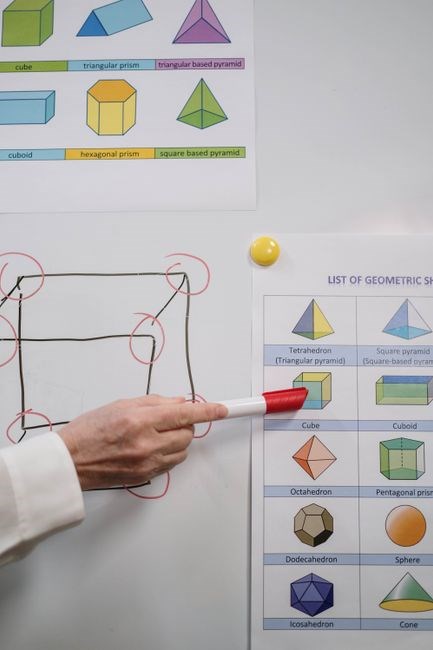
- Geometry: Euclidean proofs, transformations, spatial reasoning.
- Two‑Variable Data: correlation, regression, scatter‑plot analysis.
- Statistical Literacy: probability, hypothesis testing, data validity.
- Graphical Models: histograms, box‑plots, contour maps, software use.
Each chapter builds on previous concepts, offering examples, real‑world applications, and assessment tools daily.
Chapter 1: Trigonometry
Foundations of Mathematics 12 dedicates its first chapter to trigonometry, weaving core concepts with practical applications. Students begin by revisiting the unit circle, learning how angles in radians and degrees correspond to coordinates (x, y). The chapter systematically introduces sine, cosine, and tangent functions, emphasizing their reciprocal relationships—cosecant, secant, and cotangent—and the significance of the Pythagorean identity. Through interactive diagrams, learners visualize how the ratios of side lengths change as the angle varies from 0° to 360°, reinforcing the periodic nature of trigonometric functions. The text then guides readers through solving right‑triangle problems, applying the Law of Sines and Law of Cosines to determine unknown sides or angles in any triangle, regardless of its type. Real‑world scenarios—such as calculating the height of a building using a laser rangefinder, determining the angle of elevation for a satellite dish, or modeling sound waves—illustrate the relevance of trigonometry beyond the classroom. Each section concludes with a set of practice problems that range from straightforward calculations to multi‑step proofs, encouraging students to apply reasoning and verify solutions using algebraic manipulation. The chapter encourages problem solving foral. By the end of this chapter, learners possess a solid foundation in trigonometric theory, problem‑solving techniques, and the ability to translate real‑world situations into mathematical models.
Chapter 2: Geometry
Foundations of Mathematics 12’s second chapter immerses students in Euclidean geometry, beginning with basic elements—points, lines, planes, and angles. The text methodically explores angle properties, including acute, right, obtuse, and straight angles, and introduces angle bisectors and perpendicularity. Students learn to construct and analyze triangles, delving into the Pythagorean theorem, triangle inequality, and classification of triangles by side length and angle. The chapter extends to quadrilaterals, covering parallelograms, rectangles, rhombuses, and squares, and examines their symmetry, diagonals, and area formulas. Circles receive focused attention: radius, diameter, circumference, and area are derived, and students investigate inscribed and circumscribed polygons. Material transitions smoothly into coordinate geometry, where the distance formula, midpoint formula, and slope of a line are derived and applied to solve real‑world problems. Transformations—translations, rotations, reflections, and dilations—are introduced with clear diagrams, enabling learners to predict the effects of each operation on geometric figures. Proof techniques are emphasized through deductive exercises that reinforce logical reasoning, allowing students to construct rigorous arguments for common geometric theorems. Throughout the chapter, the textbook integrates interactive examples, such as constructing a right triangle with a given hypotenuse and area, and challenges students to solve problems that blend multiple concepts, ensuring a comprehensive grasp of geometry’s role in higher mathematics and everyday contexts. By the end, learners possess a robust toolkit for analyzing shapes, proving properties, and applying geometric principles to diverse scenarios. Students practice proving congruence and similarity using SAS, SSS, ASA criteria, reinforcing proof skills, strengthening logical reasoning.
Chapter 3: Two-Variable Data
Chapter 3 of Foundations of Mathematics 12 introduces two‑variable data, guiding students through collecting, organizing, and interpreting paired observations. It distinguishes quantitative and qualitative variables, then defines a data set as a collection of ordered pairs (x, y). Students learn to construct scatter plots, label axes, choose scales, plot points accurately. The chapter emphasizes visualizing relationships, encouraging identification of positive, negative, or no correlation. It covers measures of association, starting with the correlation coefficient r, explaining calculation, interpretation, and limitations. Students compute r with spreadsheets and assess the strength and direction of linear relationships. The text then moves to regression analysis, teaching derivation of the least‑squares line y = mx + b, interpretation of slope and intercept, and evaluation of model fit via R². Practical examples illustrate prediction, residual assessment, and significance testing of regression coefficients. The chapter integrates real‑world contexts—economics, biology, social sciences—to show relevance of two‑variable analysis. Exercises require data collection, table construction, graph plotting, correlation and regression computation, and critical evaluation of model validity. By the end, learners possess a toolkit for analyzing paired data, making informed decisions, and communicating findings in academic and professional settings.
Students also examine outliers, learning to identify and justify their exclusion or inclusion. The chapter covers categorical variables, contingency tables, chi‑square tests, and interpreting p‑values for independence.
Students review data techniques and analysis.
Chapter 4: Statistical Literacy
Chapter 4 of Foundations of Mathematics 12 focuses on statistical literacy, equipping learners to interpret data critically. The chapter begins by defining key terms—population, sample, parameter, statistic—then explores sampling methods, emphasizing random, stratified, and cluster designs. Students analyze how sample size and selection influence estimates, learning to calculate standard errors and construct confidence intervals for means and proportions. The text introduces hypothesis testing, guiding readers through null and alternative hypotheses, type I and type II errors, significance levels, and p‑values. Practical examples illustrate one‑sample and two‑sample tests, paired‑sample comparisons, and chi‑square goodness‑of‑fit analyses. Students practice formulating research questions, selecting appropriate tests, and interpreting results in context. The chapter also covers correlation versus causation, teaching students to recognize spurious relationships and confounding variables. Visual literacy is reinforced through interpreting bar charts, histograms, box plots, and scatter plots, with emphasis on scale, labeling, and data presentation ethics. Ethical considerations—data privacy, informed consent, and responsible reporting—are woven throughout. Exercises require students to design surveys, compute descriptive statistics, perform hypothesis tests, and critique real‑world studies. By the end, learners can evaluate statistical claims, assess validity, and communicate findings confidently to diverse audiences. The chapter concludes with a reflection on the role of statistics in everyday decision making, encouraging students to apply critical thinking when encountering media reports, public policy statements, scientific literature, and evidence‑based reasoning. Through guided discussion and peer review, learners refine their analytical skills and develop a nuanced understanding of uncertainty and evidence‑based reasoning.
Chapter 5: Graphical Models
Chapter 5 introduces graphical models as a visual tool for representing relationships among variables. The chapter begins with a review of basic graph theory concepts—vertices, edges, directed and undirected graphs—before moving to specific statistical models. Students learn to construct scatter plots, line graphs, and bar charts that illustrate correlation, trend, and distribution. Emphasis is placed on choosing appropriate scales, labeling axes, and using color or shading to highlight key patterns. The text explains how to interpret regression lines, confidence bands, and residual plots, guiding learners to assess model fit and detect outliers. It then covers advanced visualizations such as box‑plot overlays, violin plots, and heat maps, demonstrating how these representations can reveal underlying data structure. Interactive elements encourage students to manipulate data points, adjust parameters, and observe changes in real time. The chapter also addresses common pitfalls—misleading axes, over‑fitting, and data dredging—providing strategies to avoid them. By integrating software tools (e.g., Excel, Desmos, or statistical packages), students practice creating and exporting high‑quality graphics for reports. Students also practice overlaying multiple data series on a single chart to compare trends, learning to use legends and annotations for clarity. The chapter introduces the concept of data normalization and scaling, showing how transforming variables can improve visual interpretation and statistical modeling. Students then evaluate the impact of different chart types on audience interpretation for clarity. Finally, learners assess the effectiveness of each visual representation by conducting peer reviews, noting clarity, accuracy, and potential misinterpretations, thereby refining their graphical communication skills. Students then create a final portfolio of charts
Availability of the PDF: Legal Sources
Foundations of Mathematics 12 is distributed exclusively through Pearson’s official channels, ensuring that every copy complies with copyright law. The most reliable source is Pearson’s own online store, where the PDF can be purchased and downloaded immediately after payment. For educators and students who prefer a physical copy, Pearson’s retail partners and authorized resellers offer the book in both print and e‑book formats. Many public and university libraries subscribe to the Pearson e‑learning platform, granting patrons temporary, legal access to the PDF via institutional login credentials. Additionally, the Ontario Ministry of Education’s approved textbook list includes the Foundations of Mathematics 12, and schools can request copies through the provincial procurement system. Finally, Pearson’s “Open Library” initiative provides a limited‑time, free preview of the first chapter, allowing prospective buyers to evaluate the material before committing. All these avenues guarantee that users obtain the PDF from legitimate, copyright‑respecting sources, avoiding piracy and ensuring that authors and publishers receive proper compensation. It is important to note that any attempt to download the PDF from unofficial sites is illegal and may expose users to malware. By using only the above legal channels, learners and educators maintain compliance with intellectual property laws while accessing high‑quality, up‑to‑date educational material. These options ensure that every student has reliable access to the textbook, and that teachers can track usage. Students can also download the PDF directly from the Pearson Student Portal using their unique login credentials, which provides a secure and convenient way to access the textbook anytime, anywhere. All purchases are protected by DRM.

Download Options and File Formats
Copyright and Licensing Considerations

Study Resources and Supplementary Materials
Foundations of Mathematics 12 offers a comprehensive suite of study aids that complement the core text. Pearson’s online portal hosts a dedicated “Study Resources” hub, where educators can download chapter‑specific worksheets, problem sets, and answer keys that align with the textbook’s learning objectives. Each worksheet is formatted in PDF and includes a difficulty rating, allowing teachers to scaffold practice for diverse learners. In addition, the portal provides a series of interactive quizzes that automatically grade responses and generate instant feedback, helping students gauge their understanding of trigonometric identities, geometric proofs, and statistical inference. For visual learners, a library of short video tutorials—created by Pearson’s instructional designers—breaks down complex concepts such as the Law of Sines, the normal distribution, and linear regression. These videos are available in multiple resolutions and can be embedded directly into LMS platforms. The textbook also links to external simulation tools, such as GeoGebra and Desmos, enabling students to experiment with dynamic geometry constructions and statistical models. A companion student workbook, available as a separate PDF, expands on the textbook’s examples with additional practice problems and guided reflection prompts. Teachers can purchase a “Teacher’s Edition” that includes editable lesson plans, assessment rubrics, and a master key for all exercises. Finally, Pearson offers a subscription‑based “Math Mastery” service, which provides monthly updates to practice questions, new video content, and a community forum where educators can share best practices and troubleshoot common challenges. All resources are protected by the same DRM as the textbook, ensuring that only licensed users can access the materials. By integrating these supplementary tools, instructors can create a cohesive learning environment that reinforces key concepts and supports mastery of the curriculum. This resource set is designed to support learning styles, ensuring that every student can engage deeply with the material achieve mastery.

Teacher Support and Lesson Plans
Foundations of Mathematics 12 offers a robust teacher support package aligned with the Ontario curriculum. It includes a downloadable Teacher’s Edition PDF with detailed lesson plans, learning objectives, assessment rubrics, and pacing. Each plan follows the “3‑E” model—Engage, Explore, Explain—ensuring active participation. Plans feature differentiated instruction: scaffolded worksheets for students needing extra help and extensions for advanced learners. The package also supplies ready‑to‑use PowerPoint slides and printable handouts for classroom use. Pearson’s portal hosts a “Teacher’s Toolbox” with video tutorials on using the textbook’s interactive tools, such as dynamic graphing for trigonometry and statistical simulation modules. A community forum lets teachers share best practices, ask questions, and download peer‑reviewed lesson adaptations. The Teacher’s Edition provides a master key for all practice problems and formative assessment templates to track progress. Pearson’s “Math Mastery” subscription delivers monthly updates to lesson plans, new practice problems, and updated video content, keeping teachers supplied with fresh material; Teachers can also access a library of practice quizzes and interactive problem sets that adapt to student performance, enabling personalized pacing and immediate feedback! All resources are protected by secure login, ensuring compliance with copyright regulations.